We're excited to be upgrading your website to bring you an improved experience.
You may come across pages from our old website, like this one, which look slightly different. You can easily return to the new website at any time using the back button.
We're not sure if this is right. If you confirm where you use our services most, we can tailor our site to your needs. Note: If you've told us more than once your browser could be blocking cookies.
Click to learn more about cookies
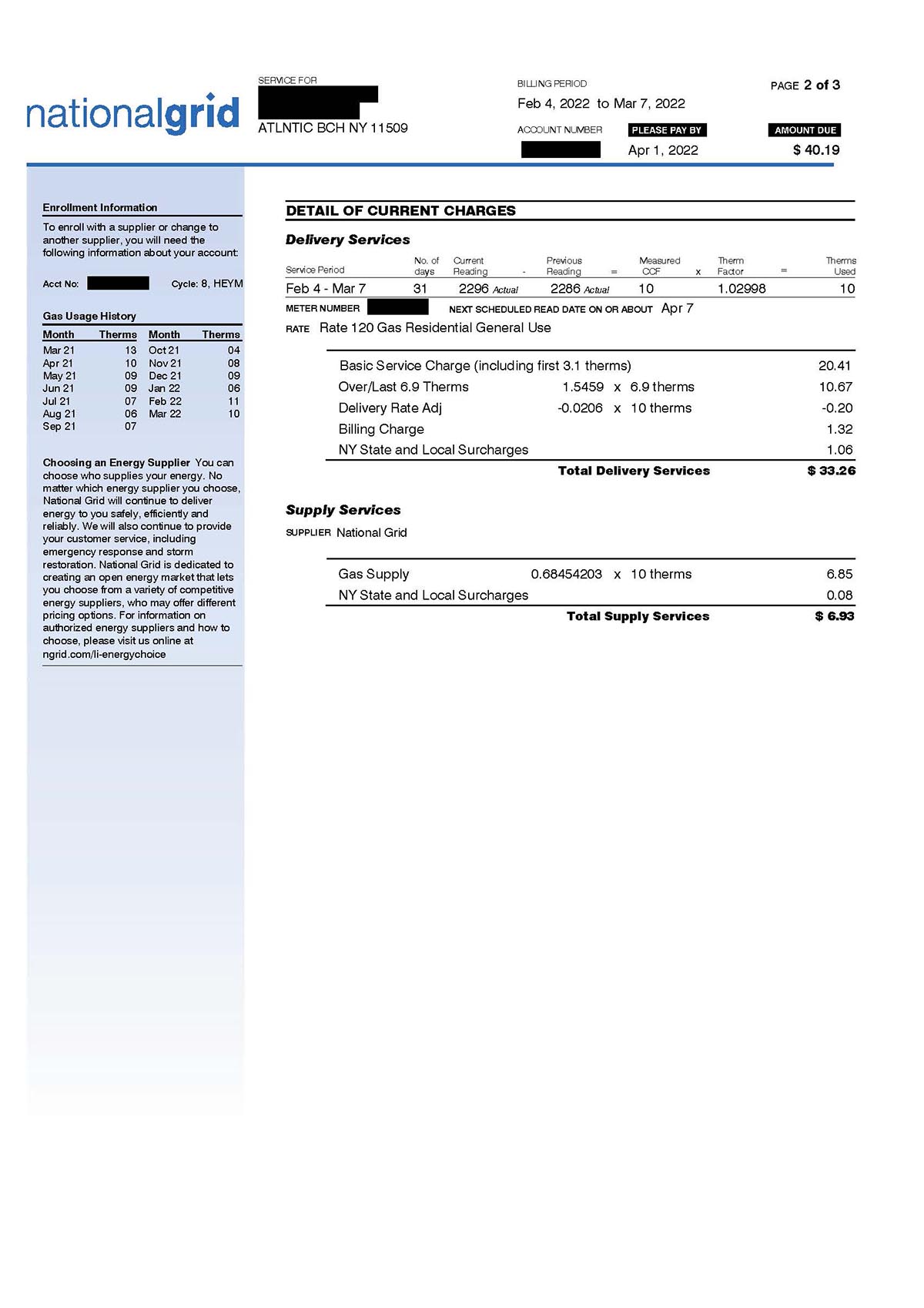
This section gives a detailed breakdown of your "Delivery" charge plus your "Supply" charges. To understand how Delivery and Supply works, view our video.The number of days within your service period can affect your current charge. Also, the weather/temperature can affect your bill amount. Your total usage is the number of kilowatt hours used between your "previous meter reading" and "current meter reading".This is not the dollar($) amount owed to National Grid. This is just a portion of your current charges.This is the total quantity of gas you used within the billing period. CCF = Cubic FeetWe take quantity of gas used between your previous meter reading and current meter reading. Then, we multiply that quantity by 1.03775 - which will give us the amount of gas therms used. The "Therms" tells us how much heat was required at your premise. The higher your therms, the higher your bill.You have the option to select your energy supplier. Learn about Energy Choice.
 Back to nationalgrid.com