 Back to nationalgrid.com
Massachusetts Grid Modernization
A Smarter Grid. A More Affordable Future.
Massachusetts has set ambitious clean energy goals. At National Grid, grid modernization helps us meet those goals. We bring smarter technology, efficient platforms, and innovative solutions to make energy more affordable and reliable for every customer, now and into the future.
How Does the Grid Work and How is it Changing?
For most of its history, the electric grid moved power in one direction: from large generating plants to homes and businesses. Grid modernization is fundamentally changing that; the Electric Sector Modernization Plan (ESMP), or Future Grid Plan, is the roadmap for this transition, building a smarter, two-way network where energy can flow both to and from customers. This means greater flexibility, lower costs, and expanded access to clean energy technologies like rooftop solar, battery storage, and electric vehicles. The result is a more reliable, affordable grid that works for every customer across the Commonwealth.
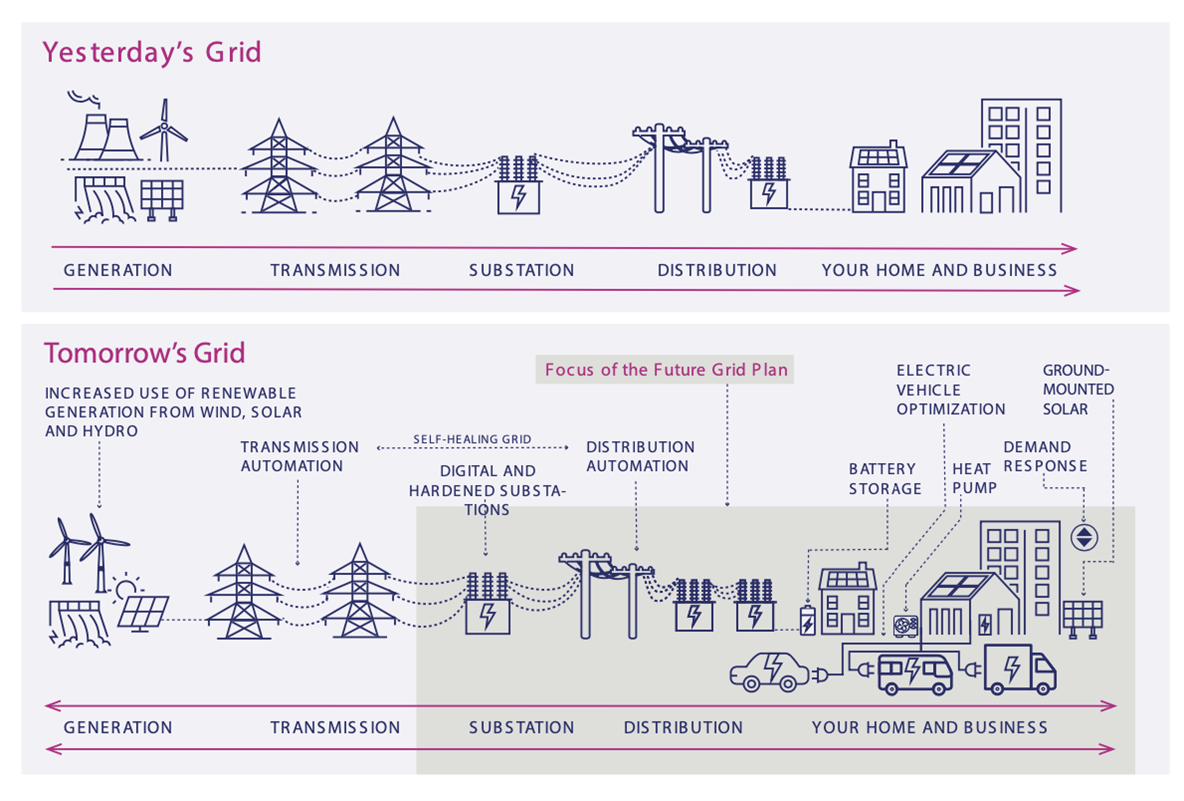
How Your Grid is Evolving
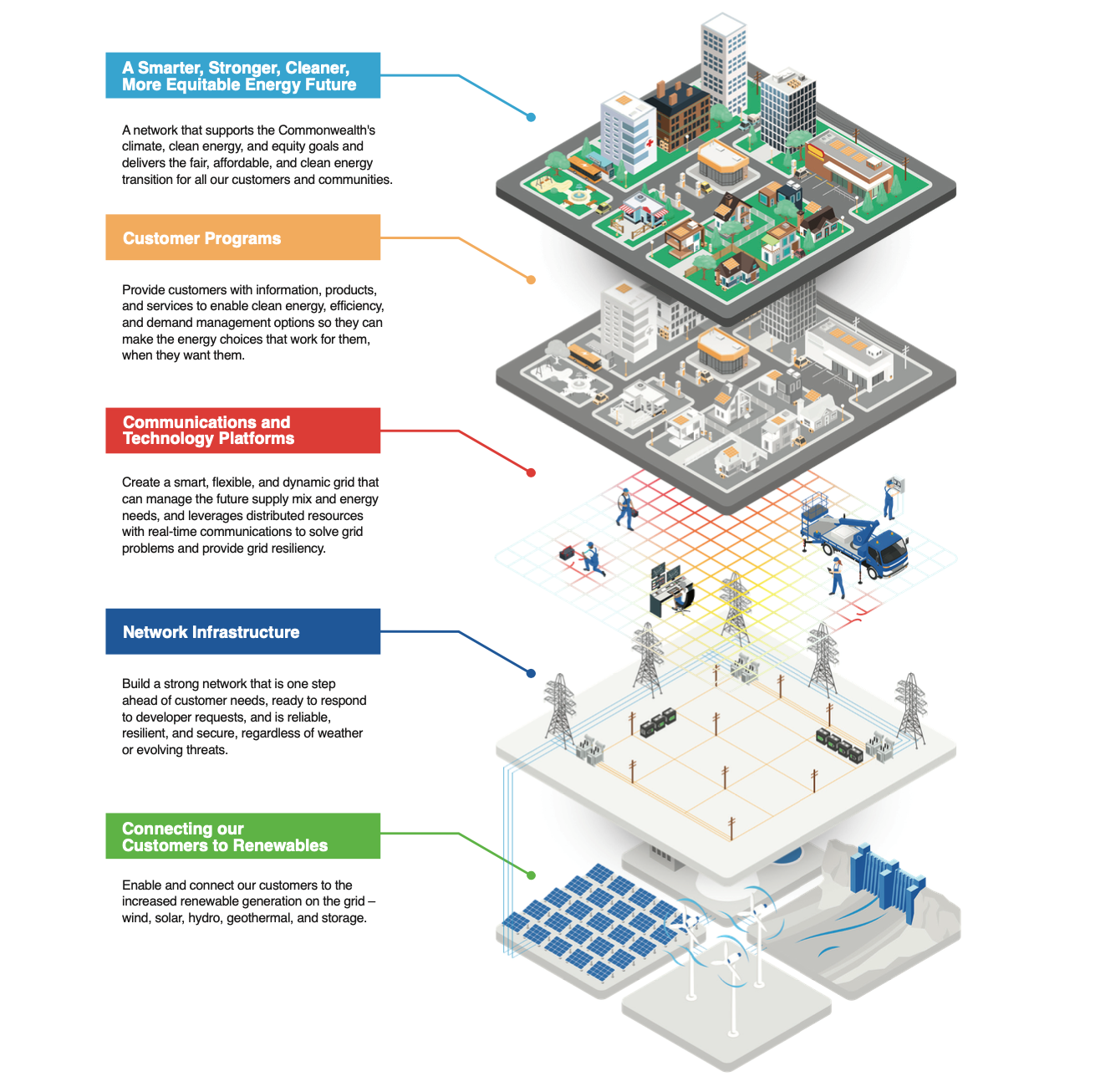
What Are the Benefits?
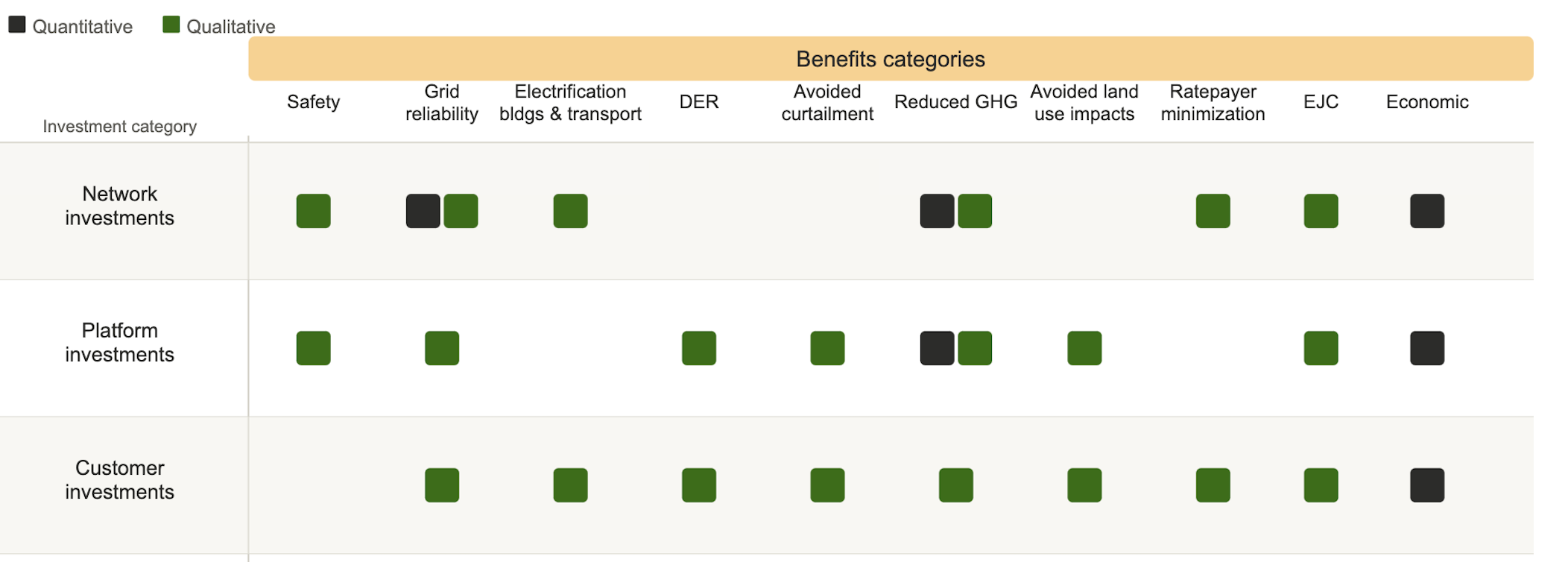
The ESMP is organized around four interconnected layers — from the physical network that carries power, to the technology platforms that manage it, to the programs that put clean energy choices in customers' hands. Together, these investments build toward a smarter, more equitable energy future. The table below shows which investments deliver which benefits.
Climate Impacts and Resilience
Climate change is affecting the Commonwealth’s weather in dramatic ways today. Historically, National Grid’s system could expect 4 major storm events with significant outage impacts each year; now the expectation has risen to 10 storms per year. These storms can also be more intense and localized, creating wind and flood damage. Higher summer temperatures and humidity levels are generating multiple effects, including increased customer cooling usage and higher summer peak energy use. Winters are also subject to ‘polar vortex’ conditions that bring intense cold and snow, with corresponding outage risks and peak demand impacts.
To identify climate hazard risk, the Company applied a Climate Vulnerability Assessment (CVA), which is an innovative approach to mapping electric infrastructure to potential climate hazards – such as floods, heatwaves, and high winds. As our understanding of the scope of climate-related challenges matures, the flexibility and robustness of the grid will be built to meet them.